Rudolf Vrba and Alfred Wetzler Fled Auschwitz and Wrote a Report
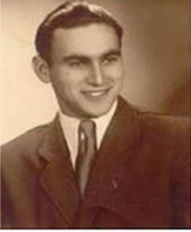
Rudolf Vrba - Wikimedia Commons
by Kathy Warnes
Rudolf Vrba and Alfred Wetzler escaped from Auschwitz, and warned the world about assembly-line murder as Jewish leaders debated how to stop the Nazis.
Two young men, Rudolf Vrba, 20, and Alfred Wetzler, 22, crouched in a woodpile outside of the main gate at Auschwitz listening to the camp noises. They could hear the SS guards shouting, their dogs barking, and the low murmur of people talking behind barbed wire.
It was April 7, 1944, a desperate spring for Rudolf and Alfred and all European Jews. As the Nazis tightened their stranglehold on Europe, they deported more Jews to Auschwitz to be gassed and the camp crematoria burned day and night. The smell of burning bodies hung in the air, mingling with the smell of their own bodies which they had slathered with gasoline soaked in Russian tobacco to hopefully mask their scent from the SS dogs.
The fugitives believed that the world would listen to their eyewitness testimony that the Nazis were gassing and burning Jews by the thousands and that if the Jews knew what fate awaited them at Auschwitz, they would rebel and refuse to board the deportation trains. This faith impelled them to risk escaping from Auschwitz.
Rudolf Vrba and Alfred Wetzler Escape from Auschwitz
Since its founding in June 1940, several hundred people had attempted to escape from Auschwitz, but fewer than 150 people managed to permanently evade the Nazis. The Germans shot prisoners while they tried to escape or captured them, tortured them, and executed them in front of the entire camp.
After three days of hiding in the woodpile, the two fugitives made their way out of the camp and into the countryside along an escape route through Poland. In the early years of Auschwitz Polish farmers and villagers were eager to help escapees from the camp and strike a blow against the hated SS garrison. They helped escaped prisoners and local underground organizations including the Home Army, Polish Socialist Party, and Peasant Battalions, who worked to aid the fugitives.
By the time Rudolf and Alfred escaped in 1944, the Germans had replaced the Polish people in the towns and villages in the Auschwitz region with ethnic Germans fiercely loyal to Hitler and the Third Reich. Rudolf understood that he and Alfred had to make it to the Czechoslovakian border on their own. They tried to blend into the countryside, but they stood out from other people because their heads were shaven, they were dirty and they smelled of the camp. The SS searched for them with dogs and German troops and military convoys were on the move. The two fugitives faced many dangers.
Although they were cautious, Rudolf and Alfred did make mistakes on their perilous trip to the border. On their third day on the run, they accidently wandered into a town. They stumbled down alleys and back streets, expecting to run into a German patrol around every corner. Exhausted and lost, they knocked on the door of a nearby house and a peasant woman agreed to help them. She gave them breakfast and a safe place to sleep until night time.
After a day’s rest, Rudolf and Alfred continued on their journey. They were still not even halfway to the Slovakian border and moving quickly along they stumbled onto a woman tending her crops. At first she was quite suspicious of them, but she eventually introduced them to a friendly Polish farmer who agreed to take them to the border and show them a place to safely cross. The last part of their journey took them two days, but finally the farmer guided them to a clearing near the border. They waited for a German patrol to pass and then they slipped into Czechoslovakia.
Rudolf Vrba and Alfred Wetzler Try to Convince the Jewish Council
After three days of hiding in the woodpile outside of Auschwitz, and fifteen days of walking more than 85 miles through occupied Poland, Rudolf and Alfred arrived at the Jewish Council headquarters in Zilina, Czechoslovakia on April 25, 1944.
Rudolf described the atrocities that he and Alfred had witnessed at Auschwitz to the Jewish Council. Its members shook their heads in horrified disbelief. Resistance fighters knew that the Nazis had terrorized Jewish communities for years. They knew that the Nazis deported Jews to concentration camps and they had heard that the conditions in the camps killed many people. But sending people to gas chambers and crematoriums? It was almost impossible to imagine industrialized, bureaucratic, assembly-line mass killings.
The skeptical Jewish Council tested Rudolf and Alfred’s story. They asked Rudolf for the names of people that had been in Auschwitz with him and checked the names against the records of the Jews who had been deported from Czechoslovakia. Rudolf had memorized every transport arriving at Auschwitz, the number of people on the transport and how many people were immediately chosen for the gas chamber. The Jewish Council again shook their heads in horrified disbelief. Rudolf and Alfred’s words had changed their record book into a book of obituaries.
Convinced at last of the truth of their story, the Jewish Council asked them to dictate everything they could remember about Auschwitz and its Nazi operators. As Rudolf vividly described the details, he stressed that the nightmare wasn’t over and that the Nazis had targeted the Jews of Hungary as the next victims. Auschwitz had already been prepared for their arrival. The testimony of the two Auschwitz escapees provided the foundation for a report describing the early history of Auschwitz and the events in Auschwitz from April 1942 to April 1944.
Jewish Rescue Groups React to Rudolf Vrba and Alfred Wetzler’s Report
After the German Army occupied Hungary in March of 1944, the SS moved in with a special commander by the name of Adolf Eichmann. For over two years Eichmann had perfected the process of deporting European Jews to Poland death camps, and he was eager to begin work in Hungary.
Hungarian Jewish leaders were prepared to negotiate with the Nazis. Joel Brand, a leader of the Aid and Rescue Committee, a Budapest group that helped Jewish refugees escape, negotiated with Eichmann for a deal between the SS and the Allies. Eichmann would release one million Hungarian Jews if the Allies would give Germany 10,000 trucks and other supplies in what became known as the "blood for goods" proposal. The deal fell through and there is no way of knowing whether Eichmann had made a genuine offer, but the negotiations delayed further action on the Vrba-Wetzler Report.
Rudolf Kastner, a Zionist and another leader of the Aid and Rescue Committee in Budapest, recognized two important truths. The Vrba-Wetzler Report was true and Eichmann held the power of life and death over Hungary’s Jews. Delaying publicizing the report, Kastner negotiated with Eichmann to allow 1,685 Jews to escape to Switzerland on what came to be known as the Kastner train, in return for money, gold, and diamonds.
By May 15, 1944, Rudolf Vrba was an angry and disillusioned man. The deportation of Hungarian Jews began despite the fact that he and Alfred had risked their lives to document the SS operations at Auschwitz. He felt that he had failed in the most important mission of his life, and he believed that if the Hungarian Jewish Council had quickly acted on his report, the Jews wouldn’t willingly board the deportation trains. Despite the efforts of dedicated humanitarians like Raoul Wallenberg, over 600,000 Hungarian Jews were deported to Auschwitz and sent to the gas chambers at the fastest pace of any during the entire Holocaust.
The World Reacts to the Vrba-Wetzler Report
After the Vrba-Wetzler report had been translated, couriers and communications sent it to people that needed to know about it, including the Vatican, the Jewish Community in Switzerland and British and American representatives in Switzerland.
On June 15 1944, the BBC World Service broadcast the report and on June 20, 1944, the New York Times published the first of three stories about the gas chambers at Auschwitz. President Franklin Delano Roosevelt and other world leaders appealed to Admiral Miklos Horthy, dictator of Hungary, to stop the deportations. Admiral Horthy halted the deportations.
The Executive Office of the United States War Refugee Board published an English version of the Vrba-Wetzler report that it titled "German Extermination Camps – Auschwitz and Birkenau" on November 26, 1944. The War Refugee Board combined the material from the Vrba-Wetzler Report with two other reports that were known as the Auschwitz Protocols and all of them were submitted as evidence at the Nuremberg Trials as Document Number 022-L.
Survivor Discourse and Expert Discourse
Rudolf survived the war and earned a doctorate in bio chemistry and chemistry. He ultimately became an Associate Professor of Pharmacology at the University of British Columbia until his retirement in the early 1990s.
In his memoir, I Escaped From Auschwitz I Cannot Forgive, Rudolf Vrba continued to argue that many of the Hungarian Jews deported to Auschwitz would have resisted or hidden if they had known that they were slated to be killed instead of resettled. In his memoirs he wrote that the Jewish communities in Czechoslovakia and Hungary trusted the Zionist leadership like Kastner of the Aid and Rescue Committee or the orthodox leaders of the Jewish Councils and this trust often led them to their deaths.
The Nazis, aware of this trust, dangled the promise of negotiating the release of the Jews in exchange for compliance and cooperation. In reality, according to Professor Vrba, the Nazis used the Jewish councils and committees as pawns to keep the Jewish communities calm and compliant.
Yehuda Bauer, Professor of Holocaust Studies at the Hebrew University of Jerusalem has written that he admires Professor Vrba and considers him a genuine hero of the Holocaust, but that his "wild attacks on Kastner and on the Slovak underground are ahistorical and simply wrong from the start…"
In a 2004 letter to Professor Ruth Linn, Dean of the Faculty of Education at Haifa University, Professor Bauer wrote that he simply disagreed with Professor Vrba’s historical ideas "in which he thinks he is an expert, though I am not sure he is justified in thinking so."
Professor Linn herself wrote a book that she called, Escaping Auschwitz, A Culture of Forgetting. In her book Professor Linn labels the controversy about Vrba and his report and memoir as a tension between "Survivor discourse" and "expert discourse."
The story of the Vrba-Wetzler Report and the Auschwitz Protocols has been widely documented through Europe and North America, but according to Professor Linn, the citizens of Israel didn't hear of the Auschwitz Protocols until the end of the 20th Century. She wrote that there has been a conspiracy of silence about it in Israel.
The controversy about the Auschwitz Protocols is more than a dispute between historians over historiography and even more than a dispute between people who live through a horrific experience and those who interpret that experience. The controversy puts a spotlight on how a country must critically confront a morally problematic past and how it must publicly and openly expose and analyze the political forces that try to control the truth about its past.
References
Bauer, Yehuda. A History of the Holocaust. Franklin Watts, 2002.
Bergen, Doris. War And Genocide: A Concise History of the Holocaust. Rowman & Littlefields Publishers Inc., 2009.
Gutman, Yisreal, ed. Encyclopedia of the Holocaust. New York: Macmillan Publishing Company 1990.
Hilbert, Raul. The Destruction of the European Jews, first published 1961; this edition, Yale University Press, 2003.
Linn, Ruth. Escaping Auschwitz: A Culture of Forgetting. Cornell University Press, 2004.
Vrba Rudolf. I Escaped From Auschwitz. I Cannot Forgive. Barricade Books, 2002.
