Leif Ericson and L'Anse Meadows
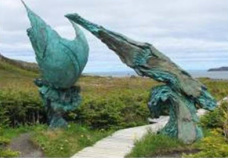
Leif Ericson at L'Anse Meadows
by Kathy Warnes
Two of the undisputed facts in the story of Leif Ericson is that the Vikings were consummate shipbuilders and sailors and Leif Erickson was born into an impressive maritime tradition. When Europeans of his time glimpsed a square sail and dragon- head prow on the horizon they fled or waited in terror for the impending Viking raid.
Viking Naval Craftsmanship
The Viking Age, lasting from 800-1100 A.D., featured the sleek, speedy Viking long ship or drekar, an unsurpassed technological advantage, which allowed them to dominate the world of medieval warfare, politics and trade.The long ships carried troops and could cross open oceans under sail and then be converted to oars for lightning attacks on vulnerable towns and cities. Long ships enabled Vikings to raid areas extending from northern England to North Africa.
Viking naval craftsmanship soon expanded to other kinds of ships including the knarr or ocean cargo vessel, which they created using similar design principles to the long ship. The knarr was higher and wider contrasted to its length and had cargo decks fore and aft. The knarr made it possible for Vikings to establish extensive trade networks and colonize Iceland, Greenland, and America.
Leif Ericson Visited America 500 Years Before Columbus
Over his lifetime, Leif Ericson made full and effective use of Viking ship technology. Another undisputed fact about Leif Ericson is that he was an explorer from Iceland and one of the first European visitors to North America when he and his men pulled their Viking ships up on its beaches 500 years before Christopher Columbus.
The Icelandic Sagas Version of Leif's Life Story
Two Icelandic Sagas, commonly called the Saga of the Greenlanders and the Saga of Eric the Red relate the story of Leif's life and place of his birth in 971 and his death in 1015, although other biographies cities different dates. It is certain that Leif was the second son of Erik the Red, who was exiled from Iceland and established the first European settlement in Greenland.
According to the Sagas, Leif moved to Greenland with his parents in 986, and in the same year Bjarni Herjolfson followed Eric the Red to Greenland. The Sagas imply that Bjarni Herjolfson was not a good navigator, because he missed Greenland and sailed to the southwest until he sighted the Labrador and Newfoundland coasts.
Fifteen years old at the time, Leif avidly listened to Bjarni’s tales of his adventures which focused on trade because Bjarni craved trade more than discovering new lands. Leif rebelled under his father’s patriarchal rule and when he came of age, he made up his mind to visit the southernmost land that Bjarni had described as featuring large timber stands along the coast. Bjarni supplied Leif with the same ship that he had used on his own trip and Leif planned his voyage. He was a brave, forceful, shrewd leader who paid meticulous attention to all details.
Leif Goes Sailing and Exploring
The Sagas say that Leif’s voyage and discoveries were not accidents and they reveal that some historians don’t realize how skilled the Vikings were at navigation. Leif set sail in 995, passed Markland (Labrador) and reached Newfoundland. Here the Sagas say his thirsty crew licked dew from the grass. The men decided to winter here because they noticed that the days were longer than those at home.
Leif and his crew made ready to spend the winter, a task that was made easier by the lack of Native Americans in the vicinity. Later accounts said that Leif and the other Vikings did encounter natives that they called Skraelings. Besides building huts to live in, Leif and his men cut timber went hunting and explored. Tyrker, one of the men went exploring and returned with grapes and soon the men began hacking vines and harvesting grapes as well as cutting timber.
Since there was such an abundant grape harvest, Leif named the area Vinland and it soon became known as Vinland the Good. Most leading scholars are convinced the Leif and his crew wintered on Newfoundland because wild grapes grew profusely in its then more benign climate as late as the middle of the 17th century.
Leif the Lucky Goes to Norway
Leif and his crew made the voyage home on ships loaded with timber and other valuable goods. On the way, he rescued a ship belonging to Thorer and added Norwegian trade goods to his cargo. This highly lucrative voyage prompted his countrymen to give him the nickname “Leif the Lucky.”
Leif’s father, Eric the Red, did not relinquish political power to his son and ambitious Leif sailed for Norway in 997, hoping to gain the favor of King Olf Tryggvason.
On his way to Norway, Leif visited the Hebrides and spent some time with his mistress Thorgunna When he left; she was pregnant with his son and eventually followed him to Greenland. Leif spent the winter in Norway and to enhance his power and prestige and preserve his wealth, he became one of Olaf’s liege men and a Christian.
Leif Introduces Greenland to Christianity and Explores North America
In 998, Leif returned home to Greenland bringing his new faith and a few priests with him. His mother soon converted, but Eric resolutely clung to his old beliefs. Eric and another son, Thorstein, decided to make a trip to Newfoundland, but Leif refused to allow him to use his ship.
Here the Sagas drop Leif’s story in favor of other family members, but Leif’s introduction of Christianity in Greenland and North American explorations surpass the deeds of other family members. Scholars have pinpointed various locations on the North America coast a Vinland, but in 1963 archaeologist discovered ruins of a Viking settlement at L’Anse aux Meadows in northern Newfoundland, that matches Leif’s Ericson’s description of Vinland.
References
Ingstad, Helge. Westward to Vinland. Erik J. Friis, Trans. New York: St Martin's Press, 1969.
Jones, Gwyn; A History of the Vikings. Oxford: Oxford University Press, 1968.
Horwood, Joan, Viking Discovery: L’Anse Aux Meadows, Jesperson Pr Ltd, 1986.
Two of the undisputed facts in the story of Leif Ericson is that the Vikings were consummate shipbuilders and sailors and Leif Erickson was born into an impressive maritime tradition. When Europeans of his time glimpsed a square sail and dragon- head prow on the horizon they fled or waited in terror for the impending Viking raid.
Viking Naval Craftsmanship
The Viking Age, lasting from 800-1100 A.D., featured the sleek, speedy Viking long ship or drekar, an unsurpassed technological advantage, which allowed them to dominate the world of medieval warfare, politics and trade.The long ships carried troops and could cross open oceans under sail and then be converted to oars for lightning attacks on vulnerable towns and cities. Long ships enabled Vikings to raid areas extending from northern England to North Africa.
Viking naval craftsmanship soon expanded to other kinds of ships including the knarr or ocean cargo vessel, which they created using similar design principles to the long ship. The knarr was higher and wider contrasted to its length and had cargo decks fore and aft. The knarr made it possible for Vikings to establish extensive trade networks and colonize Iceland, Greenland, and America.
Leif Ericson Visited America 500 Years Before Columbus
Over his lifetime, Leif Ericson made full and effective use of Viking ship technology. Another undisputed fact about Leif Ericson is that he was an explorer from Iceland and one of the first European visitors to North America when he and his men pulled their Viking ships up on its beaches 500 years before Christopher Columbus.
The Icelandic Sagas Version of Leif's Life Story
Two Icelandic Sagas, commonly called the Saga of the Greenlanders and the Saga of Eric the Red relate the story of Leif's life and place of his birth in 971 and his death in 1015, although other biographies cities different dates. It is certain that Leif was the second son of Erik the Red, who was exiled from Iceland and established the first European settlement in Greenland.
According to the Sagas, Leif moved to Greenland with his parents in 986, and in the same year Bjarni Herjolfson followed Eric the Red to Greenland. The Sagas imply that Bjarni Herjolfson was not a good navigator, because he missed Greenland and sailed to the southwest until he sighted the Labrador and Newfoundland coasts.
Fifteen years old at the time, Leif avidly listened to Bjarni’s tales of his adventures which focused on trade because Bjarni craved trade more than discovering new lands. Leif rebelled under his father’s patriarchal rule and when he came of age, he made up his mind to visit the southernmost land that Bjarni had described as featuring large timber stands along the coast. Bjarni supplied Leif with the same ship that he had used on his own trip and Leif planned his voyage. He was a brave, forceful, shrewd leader who paid meticulous attention to all details.
Leif Goes Sailing and Exploring
The Sagas say that Leif’s voyage and discoveries were not accidents and they reveal that some historians don’t realize how skilled the Vikings were at navigation. Leif set sail in 995, passed Markland (Labrador) and reached Newfoundland. Here the Sagas say his thirsty crew licked dew from the grass. The men decided to winter here because they noticed that the days were longer than those at home.
Leif and his crew made ready to spend the winter, a task that was made easier by the lack of Native Americans in the vicinity. Later accounts said that Leif and the other Vikings did encounter natives that they called Skraelings. Besides building huts to live in, Leif and his men cut timber went hunting and explored. Tyrker, one of the men went exploring and returned with grapes and soon the men began hacking vines and harvesting grapes as well as cutting timber.
Since there was such an abundant grape harvest, Leif named the area Vinland and it soon became known as Vinland the Good. Most leading scholars are convinced the Leif and his crew wintered on Newfoundland because wild grapes grew profusely in its then more benign climate as late as the middle of the 17th century.
Leif the Lucky Goes to Norway
Leif and his crew made the voyage home on ships loaded with timber and other valuable goods. On the way, he rescued a ship belonging to Thorer and added Norwegian trade goods to his cargo. This highly lucrative voyage prompted his countrymen to give him the nickname “Leif the Lucky.”
Leif’s father, Eric the Red, did not relinquish political power to his son and ambitious Leif sailed for Norway in 997, hoping to gain the favor of King Olf Tryggvason.
On his way to Norway, Leif visited the Hebrides and spent some time with his mistress Thorgunna When he left; she was pregnant with his son and eventually followed him to Greenland. Leif spent the winter in Norway and to enhance his power and prestige and preserve his wealth, he became one of Olaf’s liege men and a Christian.
Leif Introduces Greenland to Christianity and Explores North America
In 998, Leif returned home to Greenland bringing his new faith and a few priests with him. His mother soon converted, but Eric resolutely clung to his old beliefs. Eric and another son, Thorstein, decided to make a trip to Newfoundland, but Leif refused to allow him to use his ship.
Here the Sagas drop Leif’s story in favor of other family members, but Leif’s introduction of Christianity in Greenland and North American explorations surpass the deeds of other family members. Scholars have pinpointed various locations on the North America coast a Vinland, but in 1963 archaeologist discovered ruins of a Viking settlement at L’Anse aux Meadows in northern Newfoundland, that matches Leif’s Ericson’s description of Vinland.
References
Ingstad, Helge. Westward to Vinland. Erik J. Friis, Trans. New York: St Martin's Press, 1969.
Jones, Gwyn; A History of the Vikings. Oxford: Oxford University Press, 1968.
Horwood, Joan, Viking Discovery: L’Anse Aux Meadows, Jesperson Pr Ltd, 1986.
