WINDOWS TO WORLD HISTORY
  • Home
  • Bishop Walter Hawkins: Protected by the British Lion
  • World History Windows
  • The White Roses Defy the Nazis
  • Elias Lonnrot Compiles the Kalevala
  • Because You Were Here We Are Enriched
  • Provocative People
    • Stephane Hessel Wrote Indignez Vous
    • Writer Lafcadio Hearn Merged Greek and Japanese Cultures
    • Are Paul Redfern and the Port of New Brunswick Buried in the Amazon Jungle?
    • Hans Brinker, the Dutch Hero Who Isn't Really Dutch!
    • Rudolf Vrba and Alfred Wetzler Fled Auschwitz and Wrote a Report
    • Roman Emperor Caligula and His Legendary Lake Nemi Ships
    • Rabbi Robert Serebrenik Defies Adolf Eichmann to Save Luxembourg Jews
    • The Confederados Become Brazilian, but Honor Their Southern Roots
    • Pliny the Younger Wrote Letters about His Life in Ancient Rome
    • Hannes Hafstein, Iceland's Poet-Prime Minister, Works for a Cable
    • Mermen Are Important Players in Scandinavian Culture and History
    • William Tell, Mythical Hero, Mythical Historical Figure, or Both?
    • Fritz Thyssen Helped Finance the Nazi Party, but Later Changed His Mind
    • Leif Ericson and L'Anse Meadows
    • Sigrid and Eirikr Magnusson Contributed Much to Iceland's Culture
    • Clara and Henry Leffingwell - An English, Australian, and American Story
    • Per Jacobsen, Norwegian Ice Skater and Resistance Fighter
    • Poul La Cour Pioneered Wind Power in Denmark
    • Michel Linovich- an Italian in Napoleon's Grand Army
    • Solomon Linda, the Lion Sleeps Tonight
    • Sergei Rachmaninoff Composed Rhapsody at Senar, His Swiss Villa
  • Raoul Wallenberg, the Hero Who Never Returned to Sweden
  • Jean Baptiste Sipido Tries to Assassinate the Prince of Wales
  • The Legend of the Hermit of Cape Maleus in Greece Transcends Time
  • Happy Hands-On Historical New Year!
  • Christmas Around the World
    • A Christmas Tribute to Captain Henry Waskow
    • European Christmases in Centuries Past
    • Chasing and Capturing the Fugitive Spirit of Father Christmas
  • Women in World History
  • Madam Elisabeth Thible is the First Woman to Ride in a Free Floating Balloon
  • Nurse Edith Cavell Had The Courage to Die for Her Country
  • Gertrud Scholtz-Klink Followed Hitler Her Entire Life
  • Suzanne Valadon and Maurice Utrillo - Artists of Montmartre
  • SOE Agent Andree Borrel Lived Several Lifetimes in Her 24 Years
  • Queen Alexandra of Great Britain - Queen Victoria's Daughter-in-Law, Bertie's Patient Wife, and Her Own Person
  • Maria Gulovich Liu Joined the Czech Resistance, Won the Bronze Star and became an American Citizen
  • Francoise Marie Jacquelin, Lioness of Latour, Lioness of Acadia, Woman in her Own Right
  • Grand Duchess Marie Adelaide of Luxembourg is a Symbol of Effective Rule
  • Clara Zetin Speaks Against Hitler in the German Reichstag
  • Madam Sophie Blanchard - Official Aeronaut of the Restoration
  • Queen Amelia Maria, the Last Queen of Portugal, Stood Her Ground
  • Places for Posterity
  • Haunted Church Bells Ring in Boscastle and Tintagel in Cornwall
  • Vienna Plague Defenses Included Plague Hospitals
  • The Plundering Plague and the Downfall of the Republic of Venice
  • Ostend Belgium
  • Centuries of History and Ghosts Haunt Denmark's Dragsholm Castle
  • Does Jacques LeRay Chaumont Still Haunt Chaumont Castle?
  • Soldier's Stories
  • Napoleon Bonaparte Ignores His Little Red Man of Destiny
    • The French Revolution Has More Phases than the Moon!
    • Napoleon Bonaparte Still Owes Innkeeper Hippolyte Baretta Sixty Francs!
    • Australian War Correspondent Alan Moorehead Returns to His Roots
    • General Christian Christensen is a Dual Citizen of Denmark and the United States
    • In 1919, Villagers and Soldiers Helped Rebuild Chateau-Thierry
    • The Dudman Family Lived the Meaning of Patriotism and Sacrifice During World War II
    • Five French Boys Canoe the English Channel
    • Stalin's Spin Doctors
    • Maurice Maeterlinck Encounters American Customs
    • Carl von Ossietzky Wins the Nobel Prize While in a Nazi Prison Camp
    • Flying Kites Through All Seasons, Countries, and Histories
  • World History 101
    • Pieces of World- History Puzzle
    • World History Puzzles - the Old World Meets the New World

Napoleon Bonaparte Still Owes Tavern Keeper Hippolyte Baretta Sixty Francs!
Picture
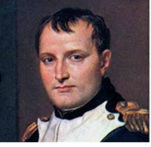
Napoleon Bonaparte-Wikimedia Commons


by Kathy Warnes

Napoleon Bonaparte mastered artillery, conquered continents, and created the French Legion of Honor. He also failed to pay a sixty franc bill in Avignon.

Madame Vorns-Baretta had spent years as an actress in the Comedie Francaise theater in Paris. At some point in her career the French Government awarded her the Legion of Honor, an honor that Napoleon had created in 1802. When Madame Vorns-Baretta finally retired in the mid nineteenth century, she returned to her birthplace, the old, walled city of Avignon in the south of France.

Napoleon Stops at Hippolyte Baretta's Tavern in Avignon

People in Avignon gossiped that Madame’s Legion of Honor was fitting and especially appropriate because Napoleon still owed her grandfather, Hippolyte Baretta, an unpaid tavern bill! Hippolyte Baretta owned a tavern in Avignon, serving omelets, ragout and VIN roué among other delectable French food and drink.

At this point in his career, young Lieutenant Napoleon Bonaparte was an obscure artillery officer on his way to participate in the Siege of Toulon. He stopped at Hippolyte Baretta’s tavern for dinner and being a skinny, hungry young man, he brought an appetite equal to his ego with him. He had grandiose ideas and he didn’t mind sharing him with the other tavern patrons. While he ate his dinner, he explained his political ideas to the customers and they had a rousing argument.
 

Dinner and Drinks, Courtesy of Lieutenant Bonaparte

Then Lieutenant Bonaparte invited several of his sympathetic listeners to have dinner with him, ordering the best meal in the house. As they ate and drank with gusto, he explained the faults of France and the rest of the world. He told them how he would do things correctly when he ruled the world. Finally, his audience drifted way and Napoleon sat alone at the table, contemplating his future throne.

Monsieur Baretta, the tavern keeper, efficiently added up the figures and presented the lone diner with the bill for sixty francs. Napoleon stood up and fished in his wallet. He came up with nothing. Napoleon didn’t have the money to pay the generous bill that his generous heart had created.

  Could Monsieur Baretta Extend Credit?

Lieutenant Bonaparte had a conversation with the tavern keeper. Monsieur Baretta could surely understand that the paymaster of the Republic, the scoundrel, always paid late and he, the Lieutenant Bonaparte, had not yet received his pay. If the good Monsieur Baretta would wait until the paymaster had fulfilled his duty with francs, Lieutenant Bonaparte would send Monsieur Baretta his sixty francs. Would Monsieur Baretta wait?

Innkeeper Hippolyte Baretta said he would wait. He might have performed a mental Gaelic shrug and asked himself, “Is there another choice?”

  Lt. Bonaparte at the Siege of Toulon

Lieutenant Bonaparte continued on his way to the Siege of Toulon which took place from September 7 December 19, 1793. The French Revolution faced external enemies, but also faced enemies from within divided France. The major port of Toulon was rabidly anti-revolutionary, so much so that on August 28, 1793, Toulon turned itself over to the Royalists and a Royalist military force supported by the Navy, occupied Toulon. Acting quickly, the Republican government in Paris laid siege to Toulon on September 7, 1793.

General Jean Carteaux and Francois Doppet tried several times to recapture Toulon, but failed. These failures allowed a young Chef de Battallion Napoloen Bonapare to scheme with his political allies to replace the failed generals with General Jacques Dugommier.

General Dugommier agreed to Napoleon’s plans to storm a key fort that would allow French artillery to bombard the British fleet anchored in the harbor. The French attacked on December 17, 1793, and Bonaparte was wounded by a bayonet in the leg.

Napoleon is Promoted to General and the Republicans Take Toulon


The next day the British fleet under Admiral Lord Hood, sailed away. Republican troops occupied Toulon on December 19, and Napoleon Bonaparte was promoted to general of brigade on December 22, 1793.

Paul Barras and Stanislas Freron led the bloody Republican takeover of Toulon. Historians estimated that between 800 and 2,000 prisoners were shot or bayoneted on Toulon’s Champ de Mars.

  Napoleon Commands the Italian Army at Nice

The new General Napoleon Bonaparte didn’t attend the massacre. Jean Francois Hernandez had treated his injuries and he was on his way to his new command as artillery commander for the Italian Army at Nice. A gate called the Porte d’Italie, that made up port of the old walls of the city of Toulon, commemorates his leave taking. A plaque notes the occasion.

Monsieur Baretta Declines to Bill Napoleon

In all of the excitement of battle and promotion, Napoleon forgot about the sixty francs. As the French Revolution progressed, Innkeeper Monsieur Hippolyte Baretta thought it would not be discrete or in good taste to present a bill for sixty francs to a man who was conquering Europe and later ruling France and most of Europe.

He kept the slip of paper with the figures on it as a memento. Many years later, the French government awarded his granddaughter Madame Vorns-Baretta the Legion of Honor, the decoration that Napoleon had created, but he still owes her grandfather sixty francs!

References

Herold, Christopher, The Age of Napoleon, Mariner Books, 2002.

Ireland, B. The Fall of Toulon: The Last Opportunity to Defeat the French Revolution. Weidenfeld & Nicolson, 2005

Powered by Create your own unique website with customizable templates.
  • Home
  • Bishop Walter Hawkins: Protected by the British Lion
  • World History Windows
  • The White Roses Defy the Nazis
  • Elias Lonnrot Compiles the Kalevala
  • Because You Were Here We Are Enriched
  • Provocative People
    • Stephane Hessel Wrote Indignez Vous
    • Writer Lafcadio Hearn Merged Greek and Japanese Cultures
    • Are Paul Redfern and the Port of New Brunswick Buried in the Amazon Jungle?
    • Hans Brinker, the Dutch Hero Who Isn't Really Dutch!
    • Rudolf Vrba and Alfred Wetzler Fled Auschwitz and Wrote a Report
    • Roman Emperor Caligula and His Legendary Lake Nemi Ships
    • Rabbi Robert Serebrenik Defies Adolf Eichmann to Save Luxembourg Jews
    • The Confederados Become Brazilian, but Honor Their Southern Roots
    • Pliny the Younger Wrote Letters about His Life in Ancient Rome
    • Hannes Hafstein, Iceland's Poet-Prime Minister, Works for a Cable
    • Mermen Are Important Players in Scandinavian Culture and History
    • William Tell, Mythical Hero, Mythical Historical Figure, or Both?
    • Fritz Thyssen Helped Finance the Nazi Party, but Later Changed His Mind
    • Leif Ericson and L'Anse Meadows
    • Sigrid and Eirikr Magnusson Contributed Much to Iceland's Culture
    • Clara and Henry Leffingwell - An English, Australian, and American Story
    • Per Jacobsen, Norwegian Ice Skater and Resistance Fighter
    • Poul La Cour Pioneered Wind Power in Denmark
    • Michel Linovich- an Italian in Napoleon's Grand Army
    • Solomon Linda, the Lion Sleeps Tonight
    • Sergei Rachmaninoff Composed Rhapsody at Senar, His Swiss Villa
  • Raoul Wallenberg, the Hero Who Never Returned to Sweden
  • Jean Baptiste Sipido Tries to Assassinate the Prince of Wales
  • The Legend of the Hermit of Cape Maleus in Greece Transcends Time
  • Happy Hands-On Historical New Year!
  • Christmas Around the World
    • A Christmas Tribute to Captain Henry Waskow
    • European Christmases in Centuries Past
    • Chasing and Capturing the Fugitive Spirit of Father Christmas
  • Women in World History
  • Madam Elisabeth Thible is the First Woman to Ride in a Free Floating Balloon
  • Nurse Edith Cavell Had The Courage to Die for Her Country
  • Gertrud Scholtz-Klink Followed Hitler Her Entire Life
  • Suzanne Valadon and Maurice Utrillo - Artists of Montmartre
  • SOE Agent Andree Borrel Lived Several Lifetimes in Her 24 Years
  • Queen Alexandra of Great Britain - Queen Victoria's Daughter-in-Law, Bertie's Patient Wife, and Her Own Person
  • Maria Gulovich Liu Joined the Czech Resistance, Won the Bronze Star and became an American Citizen
  • Francoise Marie Jacquelin, Lioness of Latour, Lioness of Acadia, Woman in her Own Right
  • Grand Duchess Marie Adelaide of Luxembourg is a Symbol of Effective Rule
  • Clara Zetin Speaks Against Hitler in the German Reichstag
  • Madam Sophie Blanchard - Official Aeronaut of the Restoration
  • Queen Amelia Maria, the Last Queen of Portugal, Stood Her Ground
  • Places for Posterity
  • Haunted Church Bells Ring in Boscastle and Tintagel in Cornwall
  • Vienna Plague Defenses Included Plague Hospitals
  • The Plundering Plague and the Downfall of the Republic of Venice
  • Ostend Belgium
  • Centuries of History and Ghosts Haunt Denmark's Dragsholm Castle
  • Does Jacques LeRay Chaumont Still Haunt Chaumont Castle?
  • Soldier's Stories
  • Napoleon Bonaparte Ignores His Little Red Man of Destiny
    • The French Revolution Has More Phases than the Moon!
    • Napoleon Bonaparte Still Owes Innkeeper Hippolyte Baretta Sixty Francs!
    • Australian War Correspondent Alan Moorehead Returns to His Roots
    • General Christian Christensen is a Dual Citizen of Denmark and the United States
    • In 1919, Villagers and Soldiers Helped Rebuild Chateau-Thierry
    • The Dudman Family Lived the Meaning of Patriotism and Sacrifice During World War II
    • Five French Boys Canoe the English Channel
    • Stalin's Spin Doctors
    • Maurice Maeterlinck Encounters American Customs
    • Carl von Ossietzky Wins the Nobel Prize While in a Nazi Prison Camp
    • Flying Kites Through All Seasons, Countries, and Histories
  • World History 101
    • Pieces of World- History Puzzle
    • World History Puzzles - the Old World Meets the New World