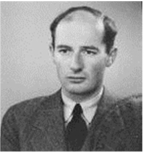
Raoul Wallenberg, the Hero Who Never Returned to Sweden
“To me there is no other choice. I’ve accepted this assignment and I could never return to Stockholm without the knowledge that I’d done everything within human power to save as many Jews as possible.”
Raoul Wallenberg to his friend Per Anger.
The family of Raoul Wallenberg contributed several generations of bankers, diplomats and politicians to his native Sweden. Raoul’s father, Raoul Oscar Wallenberg served as an officer in the navy and his cousins Jacob and Marcus Wallenberg were two of Sweden’s famous bankers and industrialists.
Raoul Wallenberg was born on August 4, 1912, three months after his father died. His mother, Maj Wising Wallenberg, remarried Fredrik von Dardel in 1918.
The Education of Raoul Wallenberg
Gustav Wallenberg, Raoul’s grandfather, took responsibility for Raoul’s education. Gustav Wallenberg sent Raoul to the University of Michigan so he could experience people of different backgrounds and cultures. After Raoul graduated, his Grandfather Wallenberg expected him to continue the family tradition and become a banker.
Raoul graduated in 1930 with top grades in Russian and drawing. After he served in the Army, he came to America in 1931 to study architecture at the University of Michigan in Ann Arbor. He took most of his classes in what is now Lorch Hall and spent much time studying. At this point in his life he spoke English, German, Russian, and French as well as Swedish.
In 1935, Raoul graduated with honors and won a medal that went to the person with the most impressive academic record. With his bachelor degree of Science in Architecture in hand, he returned to Sweden. There wasn’t a large market for architects in Sweden, so Raoul’s grandfather sent him to Cape Town, South Africa where he sold building materials for a Swedish firm. After he spent six months in South Africa, Raoul’s grandfather secured him a new job at a Dutch bank office in Haifa, Palestine, now Israel.
Raoul wrote to his grandfather, “When I now look back upon the last school year, I find I have had a completely wonderful time.”
In Palestine Raoul Wallenberg encountered Jews that had escaped from Hitler’s Germany and their stories of the Nazi persecution deeply affected him. He had developed a deep reverence for life and compassion for human suffering. He also had a legacy of Jewish blood through his grandmother’s grandfather.
In 1936 Raoul returned to Sweden for Haifa and resumed his old role in the family business. Over the next few years he accumulated business and social contacts and knowledge during his trips throughout Nazi-occupied France and Germany and learned how the German bureaucracy worked. He also made several trips to Hungary and Budapest.
By the spring of 1944, Hitler and the Nazis were thoroughly implementing their “final solution to the Jewish problem” . In the beginning of 1944 about 700,000 Jews still lived in Hungary which had joined Germany in the war against Russia in 1941.
When the Germans lost the battle of Stalingrad in 1943, Hungary wanted to negotiate a separate peace with the Allies.
When Hungarian head of state Milos Horthy refused to meet Hitler’s demands, Hitler invaded Hungary on March 19, 1944. The Germans began to deport Jews to Auschwitz-Birkenau in southern Poland soon after that. The Jewish citizens of Budapest knew that they too would soon join the thousands of people who had been deported to Auschwitz for the final solution. Desperately, they sought help from the embassies of the neutral countries, where provisional passes were issued for Jews with special connections to these countries.
Franklin Delano Roosevelt Creates the War Refugee Board
Documents and the American Central Intelligent Agency (CIA) reveal that in 1944,after American President Franklin D. Roosevelt signed Executive Order 9417 establishing the War Refugee Board.
Raoul Wallenberg’s business partner Koloman Lauer was chosen as an expert on Hungary. Koloman Lauer suggested that his business partner, Raoul Wallenberg, head the Budapest office, insisting that despite his youth Wallenberg was a quick thinker, energetic, brave, and compassionate. He also had a famous name.
The Office of Strategic Services (OSS), the forerunner of the CIA, recruited Raoul Wallenberg to head its operations in Budapest, Hungary. Wallenberg was charged with helping to save as many Hungarian Jews as he could. The Allies needed a volunteer to go where Allied tanks and airplanes couldn’t to disrupt the Nazi death machine and the War Refugee Board chose Raoul Wallenberg.
Raoul Wallenberg Didn’t Have to Accept the Budapest Challenge
Raoul Wallenberg wasn’t an obvious choice for the mission. In 1944, this 32 year old wealthy upper class, Swede could have comfortably sat out the war in his neutral Sweden. He could have used the excuse of his prominent, well-respected family. He could have used the excuse of his country’s neutrality. He could have used the excuse of his political connections and his probable place in the Wallenberg family empire someday. Accepting the Budapest challenge would gain him nothing and risk everything. Raoul Wallenberg accepted the challenge.
Raoul Wallenberg Creates the Schutzpasse
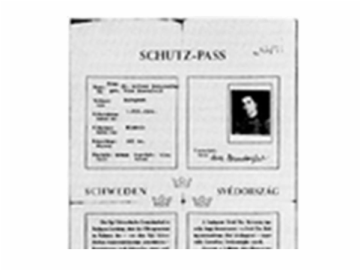
Raoul Wallenberg learned that Adolf Eichmann was transporting about 12,000 Hungarian Jews to the gas chambers each day and he hastily traveled to Budaptest armed with the diplomatic cover of First Secretary of the Swedish Legation. He created a plan using false Swedish passports or Schutzpasse, which he created and used to give Jews safe passage out of Nazi control. He established a series of safe houses within Hungary itself, disguised as official Swedish legation buildings under diplomatic protection. With the backing of the United States War Refugee Board and the Swedish Government, Raoul Wallenberg entered Hungary on July 6, 1944 with the mission of saving as many Jews as possible from the Nazis.
The Schutz Passes were prototypes of the formal, official pomp that impressed the Nazis, because Raoul Wallenberg had correctly analyzed his adversaries and understood that the Nazis and Hungarian fascists - Arrow Cross - responded to absolute authority and official status. He used this understanding in fashioning his passports and in his personal dealings with his adversaries.
According to Sandor Ardai, one of Wallenberg’s drivers, Wallenberg acted decisively when he heard a trainload of Jews was about to leave for Auschwitz. Ardai said that Wallenberg climbed up on the roof of the train and handed out protective passes that he and his colleagues had manufactured, assuring the Jews Swedish diplomatic protection. He ignored German orders to get down and when the Hungarian fascist Arrow Cross men began shooting at him and shouted at him to away, he ignored them as well and calmly continued slipping passports to life into the outstretched hands. Ardai believed that the Arrow Cross men deliberately aimed over Wallenberg’s head because they were so impressed by his courage.
After Wallenberg had handed out all of his passports, he ordered all of the passport holders to leave the train and get into the caravan of cars marked with Swedish colors, that he had parked nearby. Ardai said, "He saved dozens of people from that train and the Germans and Arrow Cross were so dumbfounded that they let him get away with it."
At the high point of Raoul Wallenberg’s program, over 350 people were involved in rescuing the Hungarian Jews and he and his workers are credited with saving tens of thousands of Hungarian Jews. Eventually, Wallenberg had to sleep at a different house every night to elude Arrow Cross Party members or Eichmann’s men.
Two days before the Russians occupied Budapest, Wallenberg negotiated with Eichmann and General Gerhard Schmidthuber, the commander of the German Army in Hungary. He bribed Pal Szalai, an Arrow Cross Party member, to deliver a note that persuaded Eichmann and the General to cancel a final program to force the remaining Jews of Budapest into a death march by threatening them with prosecution for war crimes once the war had ended. People that Wallenberg saved include biochemist Lars Ernster and Tom Lantos who later became a member of the United States House of Representatives.
Raoul Wallenberg Has Post War Plans
In Budapest, Hungary on January 13, 1945, an advancing Soviet army unit spied a man standing and waiting for them in front of a house with a large Swedish flag above the door. In fluent Russian, Raoul Wallenberg told a surprised Russian sergeant that he was Swedish chargé d'affaires for the Russian-liberated parts of Hungary. He requested and the Russians granted him permission to visit the Soviet military headquarters in the city of Debrecen east of Budapest.
Raoul Wallenberg felt an urgent need to go to Debrecen because he had created a financial plan for the surviving Jews to implement after the war and he wanted to explain it to the Russians.. The Russians didn’t view the Jews the same way and found it difficult to understand that Wallenberg had dedicated his soul to save them. Wallenberg believed that he had to explain his rescue operation and persuade them to endorse it. The Russians likely believed that Wallenberg’s true motivation for his rescue efforts was spying for the Americans, and they were skeptical of his negotiations with the Germans.
On January 17, 1945, Wallenberg and his driver Vilmos Langfelder and a Russian escort left Budapest bound for Debrecen. Wallenberg stopped to stay goodbye to his friends and colleagues and he told Dr. Erno Peto that he wasn’t sure if he was traveling as the guest of the Russians or their prisoner. He thought he’d be back within eight days. He has been missing for 65 years.
Raoul Wallenberg’s Fate is Still Unknown
Raoul Wallenberg and Vilmos Langfelder never returned from Debrecen. Reliable witnesses reported that the NKVD, an organization that later changed its name to KGB, arrested them and they were sent to Moscow’s Lubjaka Prison and placed in separate cells.
The Russians have insisted that Raoul Wallenberg died in Moscow’s Lubjaka Prison on July 17, 1947, but for decades, inmates in various prisons in the Russian Gulag claimed to have seen him.
Did his native Sweden and his influential cousins make the same kind of larger than life efforts to save Raoul Wallenberg that he made to save Hungarian Jews?
The Swedish government acknowledged that it had responded little and late to the Soviet detention of one of its diplomats and it had missed several chances to win his freedom. In the 1990s, Hans Magnusson, the Swedish co-chairman of a ten-year investigation into the disappearance with the Russians, said that the "worst mistakes were done in the first two years." He said that the Soviets intimidated Sweden and Sweden was unwilling to challenge them.
In the mid-1950s, Sweden pushed Raoul Wallenberg’s disappearance more aggressively, and in 1957, Soviet Foreign Minister Andrei Gromyko sent the Swedish government a memo that said Wallenberg had died of heart failure in prison ten years earlier at age 34.
Over the years more testimony that Wallenberg was still alive came in and Stockholm periodically raised the issue with Moscow, but without results.
Wallenberg’s half sister Nina Lagergren says, "It is inconceivable. Here is a man sent out by the Swedish government to risk his life. He saved thousands of people – and he was left to rot."
On October 5, 1981, President Ronald Reagan declared Raoul Wallenberg an honorary U.S. citizen, but in late October of the same year when a Soviet submarine ran aground on the coast of Sweden Stockholm ignored a call from United States Congressman Tom Lantos, one of the Jews from Wallenberg’s safe houses, to trade its crew for answers about Raoul Wallenberg. Sweden towed the Soviet submarine into international waters.
The Russian Security Services and Prisoner No. 7
In April 2010, newspaper stories around the world, including the Swedish magazine Fokus, the Jerusalem Post and the New York Times reported that the Russian Security Services identified a man known as Prisoner No. 7 who was interrogated six days after Wallenberg’s reported death was "with great likelihood" Raoul Wallenberg. In November 2009, the Security Services had reported its findings to Susanne Berger and Dr. Vadim Birstein, members of a research team that conducted a 10-year investigation into Wallenberg’s disappearance in the 1990s. The reserachers informed Wallenberg’s relatives of the findings in a letter in which Berger noted that the information had to be verified in depth but if the informationw as confirmed it the news would be "the most interesting to come out of Russian archives in over 50 years."
Berger also quoted Tomas Bertelman, the Swedish ambassador in Moscow, as saying in a note to the head of the Russian archives in December of 2009, that if true, the report would be "almost sensational."
Like the fate of Raoul Wallenberg, the fate of the report about Prisoner No. 7 is still unknown.
References
Bierman, John, Righteous Gentile: The Story of Raoul Wallenberg, Missing Hero of the Holocaust, Penguin, 1996
Handler, Andrew, Raoul Wallenberg and the Hungarian State Apparatus, 1944-1945, Praeger, 1996
Linnea, Sharon, Raoul Wallenberg: The Man Who Stopped Death, Jewish Publication Society of America, Third Printing, 1993
Rosenfeld, Harvey, Raoul Wallenberg: The Mystery Lives on, Backprint.com,2005
Wallenberg, Raoul, Letters and Dispatches, 1924-1944, Arcade Publishing, 1995.
Sharon Zinnea. Raoul Wallenberg: The Man Who Stopped Death. Jewish Publication society of America, 1994.
Newspaper Story Links about Prisoner No. 7