Hannes Hafstein, Iceland's Poet-Prime Minister, Works for a Cable
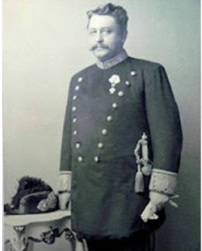
Hannes Hafstein, Wikimedia Commons
by Kathy Warnes
…” Our time is the time of industrial progress, steam and electricity, the proud time of research…” Hannes Hafstein
Hannes Hafstein - Christian Bickel Hannes Hafstein- was Iceland's first Prime Minister. He fought for home rule and a telegraphic cable for his country and left a poetic legacy as well.
Between 1904 and 1906, Iceland gained home rule and Hannes Hastein became the first “minister for Iceland” in the Danish government. As one of his first duties, he negotiated with The Great Northern Telegraph Company to install a submarine telegraph cable that connected Iceland to Europe. He also wrote and practiced poetry and read it on long, cold winter evenings.
The stories of Hannes Hafstein and the transatlantic cables are as interlinked as a the strands of the cable itself. The first transatlantic cable stretched across the floor of the Atlantic Ocean on August 5, 1858, from western Ireland to eastern Newfoundland. It bridged North America and Europe and provided communication in minutes instead of days between the two continents. More durable versions of the cable were installed in 1865and 1866.
Hannes Hafstein Studied Well
Hannes Hafstein was born on December 4, 1861, on the Mooruvellir farm in Horgardalur Valley, Iceland. His father Petur Havstein was Governor of North and East Iceland and his mother Kristjana was the sister of Tryggvi Gunnarsson, sister of Iceland’s first bank chairman. When Hannes turned ten, his father lost his office and the family moved to Sjaldarvik, north of Akureyri.
When he was just twelve, Hannes Hafstein passed the entrance exam to grammar school and attended school in Reykavik, where he ranked near the top of his class. In 1880, he earned the National School Student Certificate and in 1881, he went to the University of Copenhagen
Hannes Hafstein Wrote Poetry and Served In Parliament
His fellow student Einar H. Kvaran remembered their literary work there. Kvaran recalled that from 1881 to 1885, he and Hannes worked on their poems together. He recalled that “we found remarkable events in the nation’s literature.”He said that children learned their poems in school and at home and people sang them and priests presented them from the pulpit.
In 1882, Hannes, Einar, and Gestur Palsson and Bertel Porleifssun published the Journal Verdandi, which marked the beginning of the realist movement in Iceland. Hannes and his fellow students adopted the ideas of Dane Georg Brandes who believed that research in literature and aesthetics should be conducted using the same principles as research in the sciences.
Although he considered himself a realist, Hannes wrote romantic poetry, including the Undir Kaldadal. He expressed part of the Icelandic spirit when he wrote: “ To brave the tempest with might and main, Lends steel to courage and spurs to pride. I hope there will be a rush of rain, Or an Iceland storm on our Cold-Dale ride!”
In 1886, Hannses Hafstein earned his law degree from the University of Copenhagen and he continued to write poetry and practice law. He was a member of Althing, the Icelandic Parliament, in 1900-1901, and from 1903-1915. He attended his last parliamentary meeting in 1917, when he had to resign because of ill health.
Iceland Gained Independence and a Transatlantic Cable
People both inside and outside of Iceland had advocated a telegraphic cable linking Iceland to the rest of Europe for years. In his December 1899, report, American Consul Victor E. Nelson, based in Bergen, Norway, discussed the cable at length. The cable would be 403.89 miles long, extending between Iceland and the Shetlands. Consul Nelson predicted that the cable would be a valuable meteorological tool as well as an advance in communications. He said that the cable would be particularly valuable to American, English, French, and Norwegian companies who traded on a large scale with Iceland.
Hannes Hafstein Oversaw Iceland’s Independence and The Iceland Telegraph Service
On February 1, 1904, Iceland gained its independence, after decades of agitating for autonomy from Danish rule. Home rule brought government directly to Iceland instead of Denmark. The Ministry for Iceland, formerly located in Copenhagen, transferred to Reykjavik, which became the capital of Iceland and the center of government and commerce. The Danes did retain control of foreign affairs and some policy decisions until Iceland gained complete independence in 1944.
Although inexperienced in politics, Hannes Hafstein had earned the confidence and respect of his fellow Icelanders while advocating for independence, and he became the first Prime Minister of Iceland. He immediately began negotiations with The Great Northern Telegraph Company to install a submarine telegraph cable from Europe to Iceland.
One of the key factors in the agreement that Hafstein negotiated with the Great Northern Telegraph Company involved the company’s commitment to build overland telephone lines. Dispute over the contract focused on the fact that Icelanders believed that it was too biased toward Danish interests. They also disagreed on the pros and cons of radiogram technology.
Finally, the Danes and the Icelanders approved the contract and The Great Northern Company began laying the cable in 1904. The cable ship Cambria laid the cable on the seabed from the Shetland Islands to the Faroe Islands and took it ashore in Seydisfjordur.
On August 25, 1906, the telegraph service was officially inaugurated and Iceland had finally acquired a telegraphic cable with other countries. Officials arranged for Prime Minister Hannes Hafstein to preside over the official ceremony and send the first telegram to the Danish King in Copenhagen. Bad weather prevented the Prime Minister from making the ceremonies on time and the sheriff of Seyoisfjorour, Johannes Johannesson, sent the telegraph to the King in Copenhagen instead. In September 1906, overland telephone lines connected Reykjavik, Iceland’s capital, to Seyoisfjorour. Icelanders greeted the opening of the telegraph cable with joyful celebrations.
Hannes Hafstein Served Iceland Well
Hannes Hafstein served as Prime Minister of Iceland from 1904 to March, 1909, when he became President of the Iceland Bank. He again served as Prime Minister from 1912-1914. During his time as Prime Minister, he worked to cement good relations with Denmark and he earned the esteem and confidence of powerful Danes, including King Frederik VIII. Hannes Hafstein used his training and experience to become an expert negotiator between Iceland and Denmark. In the contentious politics of the time, Hannes worked to turn former opponents into present allies.
Hannes Hafstein died in Reykjavik on December 13, 1922. Both allies and opponents who worked with him agreed that he always struggled for harmonious solutions to problems and they all remembered how tirelessly he had worked for the Iceland cable and how fiercely he had loved Iceland. He fought his way through partisanship in his own country and controversial issues with Denmark, but he said, “When I come abroad, I am not partisan anymore, then I am only an Icelander.”
References
Karlsson, Gunnar. The History of Iceland. University of Minnesota Press, 2000.
Krakauer, Jon. Iceland: Land of the Sagas. Villard, 1998
Lacy, Terry G. Ring of Seasons: Iceland, Its Culture And History. University of Michigan Press, 2000.
Consular Reports” Manufacturers, Commerce, etc. Volume 62. United States Bureau of Foreign Commerce. P. 180.
…” Our time is the time of industrial progress, steam and electricity, the proud time of research…” Hannes Hafstein
Hannes Hafstein - Christian Bickel Hannes Hafstein- was Iceland's first Prime Minister. He fought for home rule and a telegraphic cable for his country and left a poetic legacy as well.
Between 1904 and 1906, Iceland gained home rule and Hannes Hastein became the first “minister for Iceland” in the Danish government. As one of his first duties, he negotiated with The Great Northern Telegraph Company to install a submarine telegraph cable that connected Iceland to Europe. He also wrote and practiced poetry and read it on long, cold winter evenings.
The stories of Hannes Hafstein and the transatlantic cables are as interlinked as a the strands of the cable itself. The first transatlantic cable stretched across the floor of the Atlantic Ocean on August 5, 1858, from western Ireland to eastern Newfoundland. It bridged North America and Europe and provided communication in minutes instead of days between the two continents. More durable versions of the cable were installed in 1865and 1866.
Hannes Hafstein Studied Well
Hannes Hafstein was born on December 4, 1861, on the Mooruvellir farm in Horgardalur Valley, Iceland. His father Petur Havstein was Governor of North and East Iceland and his mother Kristjana was the sister of Tryggvi Gunnarsson, sister of Iceland’s first bank chairman. When Hannes turned ten, his father lost his office and the family moved to Sjaldarvik, north of Akureyri.
When he was just twelve, Hannes Hafstein passed the entrance exam to grammar school and attended school in Reykavik, where he ranked near the top of his class. In 1880, he earned the National School Student Certificate and in 1881, he went to the University of Copenhagen
Hannes Hafstein Wrote Poetry and Served In Parliament
His fellow student Einar H. Kvaran remembered their literary work there. Kvaran recalled that from 1881 to 1885, he and Hannes worked on their poems together. He recalled that “we found remarkable events in the nation’s literature.”He said that children learned their poems in school and at home and people sang them and priests presented them from the pulpit.
In 1882, Hannes, Einar, and Gestur Palsson and Bertel Porleifssun published the Journal Verdandi, which marked the beginning of the realist movement in Iceland. Hannes and his fellow students adopted the ideas of Dane Georg Brandes who believed that research in literature and aesthetics should be conducted using the same principles as research in the sciences.
Although he considered himself a realist, Hannes wrote romantic poetry, including the Undir Kaldadal. He expressed part of the Icelandic spirit when he wrote: “ To brave the tempest with might and main, Lends steel to courage and spurs to pride. I hope there will be a rush of rain, Or an Iceland storm on our Cold-Dale ride!”
In 1886, Hannses Hafstein earned his law degree from the University of Copenhagen and he continued to write poetry and practice law. He was a member of Althing, the Icelandic Parliament, in 1900-1901, and from 1903-1915. He attended his last parliamentary meeting in 1917, when he had to resign because of ill health.
Iceland Gained Independence and a Transatlantic Cable
People both inside and outside of Iceland had advocated a telegraphic cable linking Iceland to the rest of Europe for years. In his December 1899, report, American Consul Victor E. Nelson, based in Bergen, Norway, discussed the cable at length. The cable would be 403.89 miles long, extending between Iceland and the Shetlands. Consul Nelson predicted that the cable would be a valuable meteorological tool as well as an advance in communications. He said that the cable would be particularly valuable to American, English, French, and Norwegian companies who traded on a large scale with Iceland.
Hannes Hafstein Oversaw Iceland’s Independence and The Iceland Telegraph Service
On February 1, 1904, Iceland gained its independence, after decades of agitating for autonomy from Danish rule. Home rule brought government directly to Iceland instead of Denmark. The Ministry for Iceland, formerly located in Copenhagen, transferred to Reykjavik, which became the capital of Iceland and the center of government and commerce. The Danes did retain control of foreign affairs and some policy decisions until Iceland gained complete independence in 1944.
Although inexperienced in politics, Hannes Hafstein had earned the confidence and respect of his fellow Icelanders while advocating for independence, and he became the first Prime Minister of Iceland. He immediately began negotiations with The Great Northern Telegraph Company to install a submarine telegraph cable from Europe to Iceland.
One of the key factors in the agreement that Hafstein negotiated with the Great Northern Telegraph Company involved the company’s commitment to build overland telephone lines. Dispute over the contract focused on the fact that Icelanders believed that it was too biased toward Danish interests. They also disagreed on the pros and cons of radiogram technology.
Finally, the Danes and the Icelanders approved the contract and The Great Northern Company began laying the cable in 1904. The cable ship Cambria laid the cable on the seabed from the Shetland Islands to the Faroe Islands and took it ashore in Seydisfjordur.
On August 25, 1906, the telegraph service was officially inaugurated and Iceland had finally acquired a telegraphic cable with other countries. Officials arranged for Prime Minister Hannes Hafstein to preside over the official ceremony and send the first telegram to the Danish King in Copenhagen. Bad weather prevented the Prime Minister from making the ceremonies on time and the sheriff of Seyoisfjorour, Johannes Johannesson, sent the telegraph to the King in Copenhagen instead. In September 1906, overland telephone lines connected Reykjavik, Iceland’s capital, to Seyoisfjorour. Icelanders greeted the opening of the telegraph cable with joyful celebrations.
Hannes Hafstein Served Iceland Well
Hannes Hafstein served as Prime Minister of Iceland from 1904 to March, 1909, when he became President of the Iceland Bank. He again served as Prime Minister from 1912-1914. During his time as Prime Minister, he worked to cement good relations with Denmark and he earned the esteem and confidence of powerful Danes, including King Frederik VIII. Hannes Hafstein used his training and experience to become an expert negotiator between Iceland and Denmark. In the contentious politics of the time, Hannes worked to turn former opponents into present allies.
Hannes Hafstein died in Reykjavik on December 13, 1922. Both allies and opponents who worked with him agreed that he always struggled for harmonious solutions to problems and they all remembered how tirelessly he had worked for the Iceland cable and how fiercely he had loved Iceland. He fought his way through partisanship in his own country and controversial issues with Denmark, but he said, “When I come abroad, I am not partisan anymore, then I am only an Icelander.”
References
Karlsson, Gunnar. The History of Iceland. University of Minnesota Press, 2000.
Krakauer, Jon. Iceland: Land of the Sagas. Villard, 1998
Lacy, Terry G. Ring of Seasons: Iceland, Its Culture And History. University of Michigan Press, 2000.
Consular Reports” Manufacturers, Commerce, etc. Volume 62. United States Bureau of Foreign Commerce. P. 180.
